Relocation is the silent killer of candidate momentum.
You spend months sourcing the right talent. You negotiate the salary. You sign the offer letter. Then, everything grinds to a halt.
The candidate is excited about the role, but they are terrified of the move. They are staring at a map of Atlanta with no context. They are scrolling through thousands of listings during business hours. They are losing sleep over school districts, traffic patterns, and lease terms.
For most HR teams, relocation support is a secondary thought. It is a PDF of "recommended neighborhoods" or a reimbursement check sent after the fact.
This is not a relocation strategy. This is a friction point.
At Apartment Deal Hub, we see the real cost of this friction every day. It shows up in delayed start dates, distracted new hires, and retracted offers.
To solve this, busy HR and People Ops teams need a framework. They need a system that removes the mental load from the employee and the administrative burden from the recruiter.
The Hidden Cost of Relocation Friction
The goal is not to find an apartment.
The goal is to secure a start date.
When a new hire is left to navigate the Atlanta housing market alone, they aren’t just looking for a place to live. They are managing a high-stakes logistics project in a city they don’t understand.
Atlanta is a complex market. It is a city of submarkets, each with its own pricing velocity and inventory constraints.
When housing is unresolved, the candidate is "half-in." They are mentally partitioned between their new responsibilities and their survival needs.
This creates housing-related decision fatigue. It drains the cognitive energy they should be using to onboard.
Every day a candidate spends worrying about a lease is a day they aren't focusing on their KPIs.

The Framework: Three Pillars of Corporate Relocation
A professional relocation framework isn't about being "helpful." It is about being operational.
It requires a shift from a consumer-style search to a B2B procurement mindset. This framework is built on three pillars: Intelligence, Filtering, and Execution.
1. Market Intelligence & Reality Alignment
Most relocation failures start with a gap between expectations and reality.
An intern moving from a mid-market college town or a resident coming from a lower-cost region often has an outdated view of the Atlanta market. They see a salary increase and assume it translates to a specific lifestyle.
When they see the actual pricing in Midtown or Buckhead, they freeze.
The first step of the framework is alignment. HR teams should provide candidates with Atlanta market research before the housing search even begins.
The goal is not to sell the city.
The goal is to set the parameters of what is possible.
By providing data-backed insights on commute times, neighborhood density, and current rent yields, you eliminate the "sticker shock" that leads to candidate hesitation.
2. High-Efficiency Filtering
The modern renter is paralyzed by choice.
There are too many apps, too many listings, and too much conflicting information. For a busy professional, "more options" is actually "more work."

A proven relocation framework replaces "searching" with "selecting."
Instead of sending your new hire into the wild, you provide a curated path. This means moving away from generalist tools and moving toward specialized corporate relocation services.
We focus on the "Relevant Set." We don't show the candidate 50 apartments. We show them the three that fit their commute, their budget, and their specific timeline.
This reduces the mental load. It turns a 40-hour research project into a 15-minute decision.
3. Execution and Logistics Management
The final pillar is the hand-off.
The gap between "I like this apartment" and "I have the keys" is where the most significant delays happen.
Credit checks, income verification for high-earning professionals, and complex lease structures can stall a move for weeks. This is especially true for international transfers or recent graduates who lack a standard domestic credit history.
A structured framework includes a dedicated point of contact who understands the nuances of Atlanta’s property management landscape.
This is where housing delays quietly slow down candidate placement. If the paperwork is not handled with professional urgency, the start date slips.
Why Staffing Agencies Need This System
For staffing agencies, the stakes are even higher.
In a contract-to-hire or high-volume placement scenario, speed is the only metric that matters. If a candidate cannot find housing, the placement falls through. The agency loses the commission, and the client loses the talent.
Relocation is often the "uncontrollable variable" in the placement equation.
By implementing a standardized housing framework, staffing agencies turn that variable into a constant. You aren't just providing a body; you are providing a fully-relocated, ready-to-work professional.
It is the difference between a "candidate" and a "solution."

Addressing the Intern and Resident Challenge
Interns, residents, and fellows represent a specific type of relocation friction.
They are often moving on a strict, non-negotiable timeline. They are frequently moving in cohorts. They have limited time for site visits and even less experience with corporate leasing.
The goal is not to give them a housing stipend.
The goal is to ensure they have a place to sleep the night before orientation.
A framework for this demographic relies on volume and proximity. It requires an understanding of which buildings are "intern-friendly" and which ones can handle a batch of 20 applications at once.
Without this system, your HR team becomes an unofficial (and unpaid) housing concierge. This is a poor use of your People Ops budget.
The Operational Shift: Moving from DIY to Professional Hubs
The old way of handling relocation is manual. It is a series of emails, "thank you" notes, and frantic phone calls to candidates who are stressed out.
The new way is systemic.
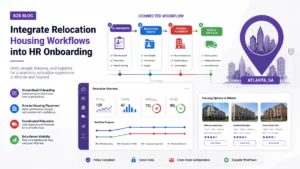
It utilizes a centralized "Hub" where all housing data, options, and logistics live. This is what we built at Apartment Deal Hub.
We don't just "find apartments." We manage the friction.
We operate as an extension of your HR department. When a candidate reaches out to us, they aren't talking to a consumer locator; they are engaging with a relocation infrastructure designed to get them into their role faster.
The goal is not to be a perk.
The goal is to be a process improvement.
Summary: Building Your Framework
If you are a busy HR professional or a staffing lead in Atlanta, your relocation framework should look like this:
- Immediate Engagement: Don't wait until the candidate asks for help. Make housing support a standard part of the offer package.
- Data Over Feelings: Provide hard numbers on the Atlanta market. Use market research to ground expectations.
- Outsource the Friction: Don't let your recruiters spend time on Zillow. Partner with a professional service that handles the heavy lifting.
- Track the Velocity: Measure how long it takes from "Offer Signed" to "Lease Secured." If this number is increasing, your framework is failing.
Relocation shouldn't be a hurdle. It should be a bridge.
By removing the housing-related decision fatigue, you empower your new hires to do what you hired them to do: work.
Partner with Apartment Deal Hub
Your talent shouldn't have to choose between a great career move and a manageable move-in.
At Apartment Deal Hub, we specialize in the Atlanta market. We help HR teams, staffing agencies, and corporate employers streamline the relocation process so they can focus on what they do best: building great teams.
Stop letting housing delays slow down your growth.
Visit ApartmentDealHub.com to see how we can integrate into your current relocation workflow and remove the friction from your hiring process today.