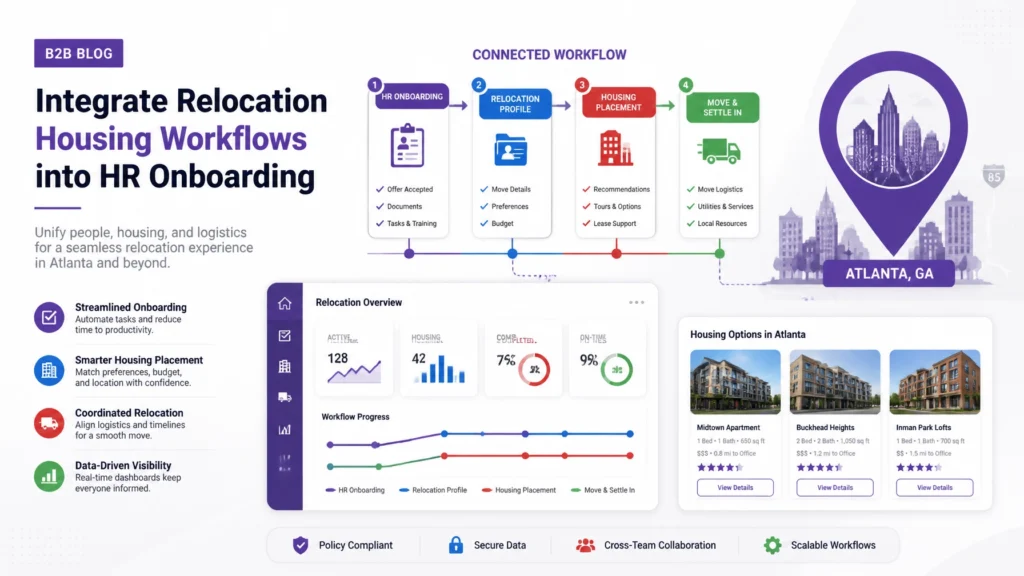
Onboarding is not just a series of documents.
It is the management of momentum.
When a top-tier candidate signs an offer letter, the clock starts.
The goal is not simply to get them to their first day.
The goal is to get them to their first day ready to perform.
In most HR departments, there is a massive, unaddressed friction point between the signed offer and the first day of work: Housing.
Traditional onboarding focuses on payroll, IT setup, and company culture.
Relocation is often treated as an external variable that the employee must solve on their own.
This is a strategic error.
Housing is the primary source of anxiety for any relocating professional.
If your onboarding process ignores the housing workflow, you are inadvertently sabotaging your own talent acquisition funnel.
The Hidden Cost of "Housing Fatigue"
The problem is not that employees can’t find apartments.
The problem is the mental load required to find the right apartment in a city like Atlanta.
The Atlanta market is not just a collection of buildings; it is a complex web of commute patterns, neighborhood dynamics, and shifting availability.
When a new hire spends their evenings scrolling through generic listing sites, they are suffering from housing fatigue.
The goal is not to give them a list of apartments.
The goal is to provide a structured placement system.
By the time they arrive for their first day, they should be settled, not exhausted.
The hidden cost of letting relocating employees search for apartments alone is a direct drop in Day 1 productivity.
Every hour spent navigating the nuances of Midtown vs. Buckhead is an hour not spent preparing for their new role.

Step 1: Mapping the Trigger Point
Integration begins with identifying the "Housing Trigger."
In a standard workflow, the trigger is usually the candidate asking, "Where should I live?"
By then, you have already lost control of the timeline.
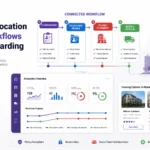
A high-efficiency workflow triggers the housing placement process the moment the offer letter is signed.
It is not just a suggestion; it is a standard operating procedure.
Your onboarding checklist should include a mandatory handoff to a structured housing partner.
This handoff ensures that the housing search runs parallel to the background check and IT provisioning.
The goal is to eliminate the gap between hire and housing.
Step 2: Standardizing the Intake
HR departments often make the mistake of acting as a middleman for housing questions.
This creates unnecessary email volume and slows down the process.
Instead, integrate a standardized intake form into your onboarding portal.
This form should capture:
- The employee's start date.
- Their preferred commute time to the Atlanta office.
- Budgetary constraints or relocation stipend limits.
- Specific lifestyle requirements (pets, proximity to transit, etc.).
Once this data is collected, it should flow directly to your relocation partner.
This is where the proven Atlanta relocation housing framework becomes an extension of your team.
You are no longer managing a search; you are overseeing a result.

Step 3: Removing Decision Fatigue
Too much choice creates friction.
When a relocating employee is presented with 20 different apartment options, they freeze.
The goal is not to show them everything that is available.
The goal is to show them exactly what fits.
A professional apartment placement system filters the noise.
It matches the employee's data against the real-time availability of vetted Atlanta properties.
By providing a curated short-list, you reduce housing-related decision fatigue.
You are giving them clarity, not a project.
Step 4: The Atlanta Commute Factor
In Atlanta, distance is a secondary metric.
Time is the primary metric.
A housing workflow that doesn't account for Atlanta's specific traffic patterns is a broken workflow.
Integration means ensuring your housing partner understands exactly where your office is located and how the local infrastructure affects the daily commute.
A new hire who chooses a "luxury" apartment without realizing it requires a 70-minute commute is a high-risk hire for early turnover.
Professional placement prevents these systemic errors.
It ensures the housing choice supports the professional commitment.
The Role of Apartment Deal Hub
Apartment Deal Hub acts as the infrastructure for your relocation needs.
We are not a consumer-facing search tool.
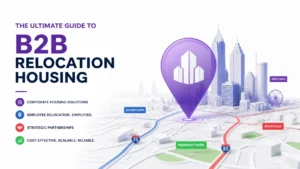
We are a B2B placement system designed for HR departments and staffing agencies.
We handle the sourcing, matching, and coordination so your team doesn't have to.
The integration is seamless.
Your team triggers the request, and our system executes the placement.
The goal is not just to find a place to stay.
The goal is to standardize the housing experience across your entire organization.
See how our system works to reduce the friction of Atlanta relocations.
Building a Scalable Infrastructure
For companies relocating interns, residents, or fellows, the stakes are even higher.
These groups often move in "waves."
Manual housing coordination for 50 interns at once is an operational nightmare.
A B2B workflow allows you to scale this process without increasing your HR headcount.
You move from a reactive posture to a proactive system.
You are no longer solving individual housing problems.
You are managing a relocation pipeline.
Conclusion: The Strategic Outcome
Integration is about more than just convenience.
It is about professionalizing the employee experience.
When a hire sees that their employer has a structured, efficient system for their housing, it builds immediate trust.
It signals that the company values their time and their mental well-being.
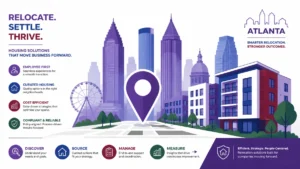
The goal is to create a frictionless transition into the Atlanta market.
By integrating B2B relocation housing workflows into your onboarding, you turn a logistical hurdle into a competitive advantage.
Stop managing the search.
Start managing the system.
For a structured approach to your company’s Atlanta relocations, visit ApartmentDealHub.com.